Homeownership
The $30,000 decision hiding in your mortgage payments.
Most people sign the paperwork, glance at the monthly number, and move on. Buried inside that standard 25-year mortgage is one of the most overlooked financial decisions you'll ever make — and it happens almost entirely on autopilot.
Here's the thing nobody sits you down and explains:
the difference between a mortgage you manage passively and one you manage with intention can be tens of thousands of dollars — sometimes more — over the life of the loan. And the tools to make that difference are already sitting in your mortgage contract, unused, most of the time.
Chapter One
The short-term impact: where your money actually goes.
"On a typical $500,000 mortgage, you could pay $200,000 or more in interest over 25 years if you never touch a single lever available to you."
In the early years of a mortgage, most of every payment goes toward interest, not principal. That's just how amortization math works — the bank gets paid first.
Short term, that feels invisible. Your payment is your payment. Nothing about a monthly statement screams you're leaving money on the table. But every dollar that goes to interest instead of principal is a dollar that isn't building your equity — and equity is what actually makes homeownership pay off.
Chapter Two
Small changes, compounded.
Mortgages come with built-in tools most homeowners never use. None of them require a financial windfall or a lifestyle change — just knowing they exist.
- 01
Increase your regular payment
Bank sets your weekly at $300? Ask them to make it $350. That extra $50 goes straight to principal, every week, forever — set once and forget.
- 02
Switch your payment frequency
Moving to weekly or bi-weekly quietly adds the equivalent of one extra monthly payment a year, without ever feeling like a sacrifice.
- 03
Double up a payment
Most mortgages let you double any regular payment on its due date, and the whole extra amount goes straight to your balance.
- 04
Make an annual lump sum
Around your mortgage anniversary, most lenders allow up to 10% of the outstanding balance. A tax refund fits naturally here.
- 05
Shorten your amortization
Going from 25 years to 20 nudges your payment up slightly — but the total interest saved is significant. We'll show you exactly how much.
- 06
Combine them
Any one of these helps. Two or three together, held with consistency, are what turn a rounding-error into tens of thousands.
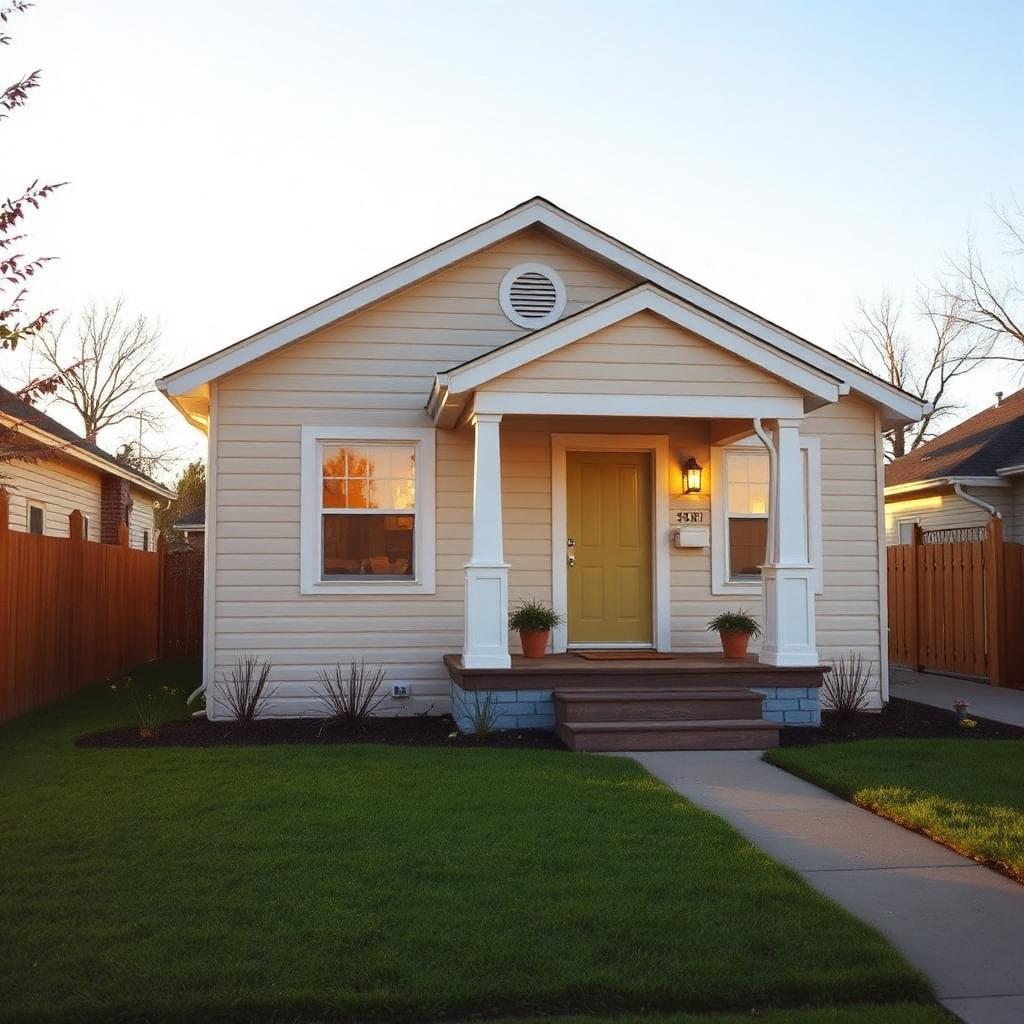
The first house
Where the small levers matter most.
Chapter Three
Seeing it in real numbers.
All of this is easier to believe with an actual example. Here's one, using a $600,000 mortgage at 4% — roughly today's average rate.
The standard approach
Monthly payments, calculated by the bank, amortized over 25 years. The bank calculates your monthly payment at roughly $3,167.
Accelerated
Same mortgage, same rate — but paid weekly, adding $25 on top of the bank's calculated weekly payment, doubling up one payment every three months, plus a $2,000 lump sum on your mortgage anniversary.
Accelerated + shortened
Same strategy as B — but this time we calculate the weekly payment off a 20-year amortization from the start, then still add the same $25/week, quarterly double-up, and $2,000 annual lump sum on top.
Year 1, side by side
Notice how similar the interest column is — and how different the principal.
| Total paid Y1 | Interest | Principal | Balance | |
|---|---|---|---|---|
| A · standard | $38,004 | $23,740 | $14,264 | $585,736 |
| B · accelerated | $44,297 | $23,651 | $20,647 | $579,353 |
| C · accelerated + shorter | $50,348 | $23,532 | $26,815 | $573,185 |
Look closely at the interest column: interest paid in Year 1 is almost identical across scenarios — around $23,500 to $23,700. The balance you're borrowing against hasn't changed yet. What's changed dramatically is the principal. Scenario C pays down nearly double the principal of Scenario A in the very first year, for a very similar amount of extra effort.
The balance, five years in
| Start | Y1 | Y2 | Y3 | Y4 | Y5 | |
|---|---|---|---|---|---|---|
| A · standard | $600,000 | $585,736 | $570,891 | $555,441 | $539,362 | $522,628 |
| B · accelerated | $600,000 | $579,353 | $557,865 | $535,499 | $512,221 | $487,994 |
| C · accel. + shorter | $600,000 | $573,185 | $545,276 | $516,228 | $485,996 | $454,530 |
- Total paid
- $190,021
- Principal
- $77,372
- Interest
- $112,649
- Total paid
- $221,486
- Principal
- $112,006
- Interest
- $109,480
- Total paid
- $251,738
- Principal
- $145,470
- Interest
- $106,268
Notice that even though Scenario C's total payments are the highest, its total interest is actually the lowest — because more of every dollar is landing on principal instead of interest, right from Year 1. That's the whole strategy in one sentence: pay more, but make sure the "more" goes to work for you instead of the bank.
All the way to payoff
The number that really matters.
The full ride. Every dollar of interest the bank quietly collects.
Same mortgage, just paid with intention. About 5.4 years early.
Nearly 8.7 years early. A further $49,516 beyond Scenario B.
Same house. Same rate. Same lender. The only difference is how deliberately the mortgage was managed.
The compounding effect
How the snowball actually starts.
Every extra dollar toward principal shrinks your balance, which means less of every future payment goes to interest — which means more of every following payment goes to principal instead. It compounds in your favour instead of the bank's.
| Year | Scenario A · cumulative | Scenario B · cumulative | Scenario B avoids | Scenario C · cumulative | Scenario C avoids |
|---|---|---|---|---|---|
| 1 | $23,740 | $23,651 | $89 | $23,532 | $208 |
| 2 | $46,899 | $46,459 | $440 | $45,971 | $928 |
| 3 | $69,453 | $68,391 | $1,062 | $67,271 | $2,182 |
| 4 | $91,378 | $89,410 | $1,968 | $87,386 | $3,992 |
| 5 | $112,648 | $109,480 | $3,168 | $106,268 | $6,380 |
Notice how small the savings look in Year 1 — a matter of dollars — and how they visibly accelerate every year after. That's the compounding effect in action. It looks unremarkable for the first year or two, which is exactly why most people give up on these strategies too early or never bother starting. Stick with it for the full term, and that trickle becomes the $84,000 to $133,000 in total savings.
These numbers are illustrative, based on a simplified weekly-compounding model at a flat 4% rate. Your actual bank's compounding method, current rate, and exact terms will shift the precise figures — but the shape of the comparison holds.

The next house
The one those savings help you reach for.
Where does a person find an extra $25 a week?
Here's an exercise worth trying. Go to the bank and take out the cash you think you'll need for the week — coffees, lunch breaks, parking, gas, the small stuff. Then see if it actually lasts you the week, paying only in cash.
We are a debit and credit card society. It's so easy to tap that we lose track of what we're actually spending — and it's hard not to wonder whether that's exactly the point. Paying cash forces your eyes open. You feel the money leave your hand.
While you're at it, actually read your statements. Errors happen more often than you'd think. I find a stray charge on my own bills at least every other month, and I pick up the phone for a refund the moment I spot it.
Find an extra $25 or $50 a week that way, put it toward your mortgage instead, and you've just made a change that costs you nothing you'll actually miss — but changes the shape of your entire mortgage.
A gentler note
If you can't do all of this right now, that's okay too.
If it's your first house, or there isn't a lot extra right now — that's completely okay. These tools don't disappear. You can access them in your mortgage at any time during its term, whenever you're in a better place to use them.
At a minimum, make your payments weekly. You genuinely won't notice a difference in your day-to-day budget — and it quietly does some of this work for you in the background.
When you renew, add onto the payment the bank requires, even if it's only $10. Small increases at renewal compound the same way everything else in this post does. Consider shortening your amortization period at that point too, if your budget can handle it.
As soon as you get your payments to the point where at least half of every payment is going to principal instead of interest, you'll feel really great about that.
A tool to see it for yourself
Numbers are always more convincing when they're yours.
We have a mortgage amortization calculator that lets you plug in your own purchase price, down payment, rate, and payment frequency, and see exactly what different strategies could save you — side by side, in real numbers. Click
here.
In the meantime, if you'd like to run these numbers for your specific situation, reach out. It's one of our favourite conversations to have — because it's the rare piece of homeownership advice that costs nothing and pays for itself many times over.
Making a Difference
realestatesmarts.ca